


How to Save Electricity with Your Home Appliances Leave a comment
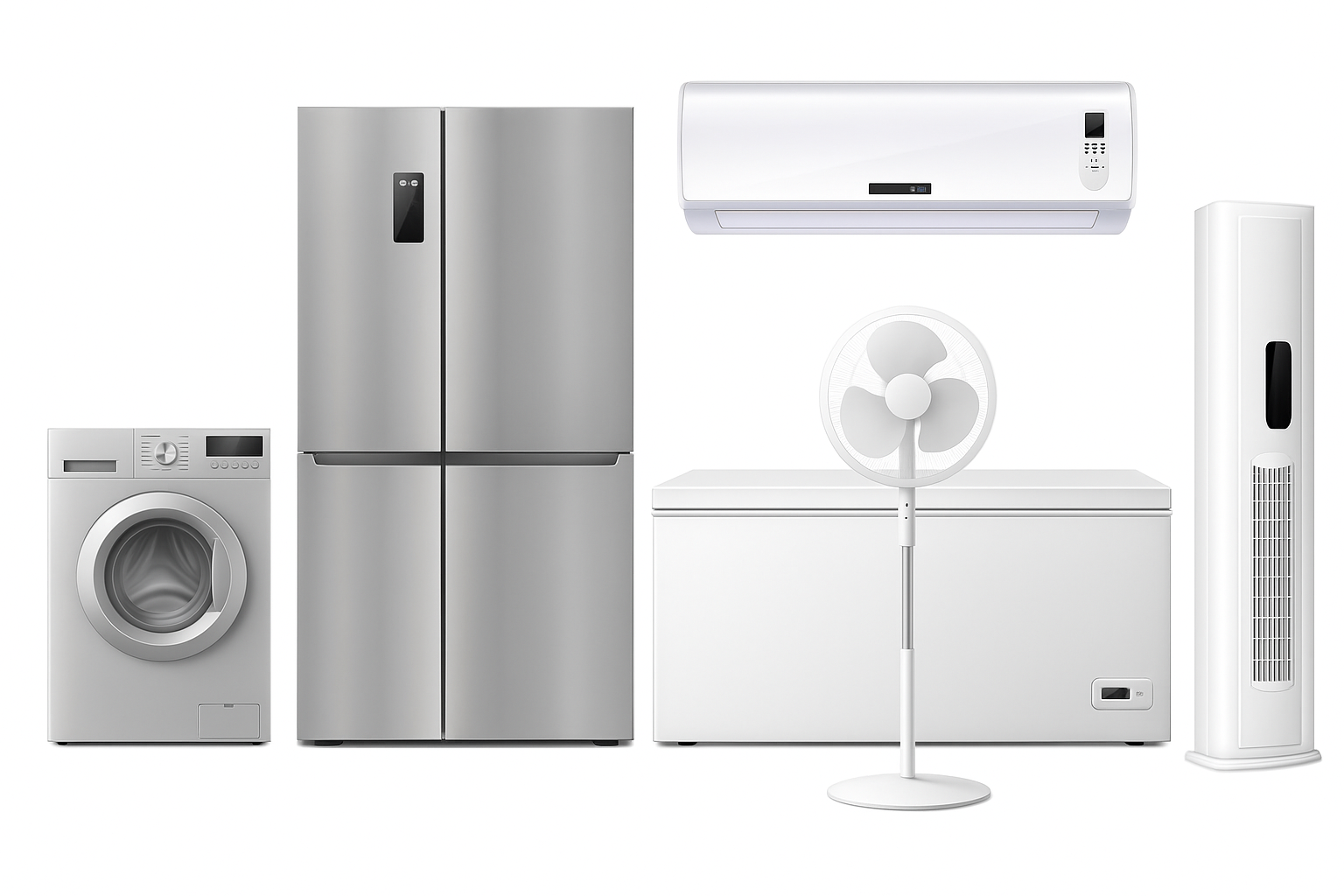
Household appliances make life easier, but they also take up a large part of monthly electricity bills. Air conditioners, fans, freezers, and washer dryers are especially demanding because they run frequently or for long hours. In homes where these appliances are used daily, even small habits can add up to a big difference in energy costs. Saving electricity is not just about cutting down on usage—it’s about using appliances wisely, maintaining them properly, and knowing the right settings to apply.
Below, we look at how you can manage these four major appliances without sacrificing comfort.
Inverter Air Conditioner
An inverter AC is built for efficiency. Instead of shutting down and restarting repeatedly like a regular AC, it adjusts its speed and power to keep the room at a steady temperature. This process reduces the stress on the compressor and cuts down energy wastage. Many households that switch from a regular AC to an inverter AC notice a significant reduction in their energy bills.
To get the best performance from your inverter AC:
- Set the temperature moderately: A range between 22°C and 25°C is usually comfortable and saves energy compared to setting it at the lowest possible level.
- Clean air filters regularly: Dirty filters block airflow, making the AC work harder and consume more electricity.
- Close doors and windows: Letting warm air in while the AC is running increases the workload on the unit.
- Block sunlight where possible: Curtains or blinds keep rooms cooler, meaning the AC runs less often.
- Schedule regular maintenance: Servicing once or twice a year ensures the compressor and cooling coils remain in top shape.
Regular Air Conditioner
A regular (non-inverter) AC is more common in many households but is less efficient because the compressor operates at full power, shuts down, and then restarts again when needed. Each restart consumes extra electricity. Still, careful management can reduce waste.
Ways to save with a regular AC include:
- Use a timer or thermostat: This prevents the unit from running unnecessarily throughout the night or when the room is already cool.
- Combine with fans: A ceiling or standing fan helps circulate air so you can set the AC at a slightly higher temperature without losing comfort.
- Service the unit: Dust, dirt, and clogged filters slow down cooling and force the AC to consume more power.
- Avoid cooling empty rooms: Always switch it off when no one is inside.
Fans
Fans are one of the most energy-friendly appliances for cooling. A ceiling fan or a standing fan uses a fraction of the electricity consumed by an air conditioner, yet can make a room feel several degrees cooler through better air circulation.
To maximize efficiency:
- Turn off unused fans: Unlike ACs, fans don’t cool the air itself—they only make people feel cooler. Running them in empty rooms wastes power.
- Use fans as support for ACs: This reduces the hours an AC needs to run and allows you to raise the temperature setting without discomfort.
Fans are especially useful at night or during moderately warm days when an AC may not be necessary. By relying on fans more often, households can cut a noticeable portion of their energy costs.
Freezers
The freezer is an old appliance that runs continuously and therefore requires smart use to prevent unnecessary energy consumption. Here are some practical steps:
- Keep it moderately full: A freezer that’s too full blocks air circulation, while one that’s too empty makes the compressor cycle more frequently. Balance is key.
- Defrost regularly: Ice buildup creates an insulating layer that makes the compressor work harder.
- Place in the right spot: A freezer kept near stoves, ovens, or under direct sunlight will struggle to maintain cold temperatures, consuming more power.
- Never put hot food directly into the fridge. Let it cool to room temperature first to avoid making the compressor work overtime.
- Organize items properly: Group similar foods together and avoid blocking vents inside the freezer, as airflow is critical for efficiency.
- Check door seals: A weak or broken seal lets cold air escape and forces the compressor to run more often.
Washer Dryer
Washer dryers are very convenient but are also among the biggest electricity users in homes, especially when using the drying function. By adjusting your laundry habits, you can save both power and water.
Tips for efficient use:
- Wash with cold water whenever possible: Heating water accounts for a large part of a washing machine’s energy consumption.
- Run full loads: Avoid frequent half loads, as each cycle consumes nearly the same amount of power regardless of the load size.
- Use quick wash cycles: For lightly soiled clothes, a shorter cycle saves both time and electricity.
- Air-dry clothes when possible: Whenever the weather allows, drying clothes on a line or rack outdoors is far more efficient than using the built-in dryer.
- Clean the lint filter before every drying cycle: A clogged filter slows down airflow, forcing the dryer to run longer.
- Choose energy-saving programs: Many washer dryers come with eco or low-energy settings that consume less power while still cleaning effectively.
Conclusion
Saving electricity at home doesn’t require major sacrifices. The appliances that make life comfortable such as air conditioners, fans, freezers, and washer dryers can be managed wisely to reduce waste. Small habits like cleaning filters, setting moderate temperatures, defrosting when necessary, running full loads, and switching off appliances when not in use all add up to meaningful savings. Over time, these changes not only lower your bills but also extend the lifespan of your appliances, giving you more value for your money.
